

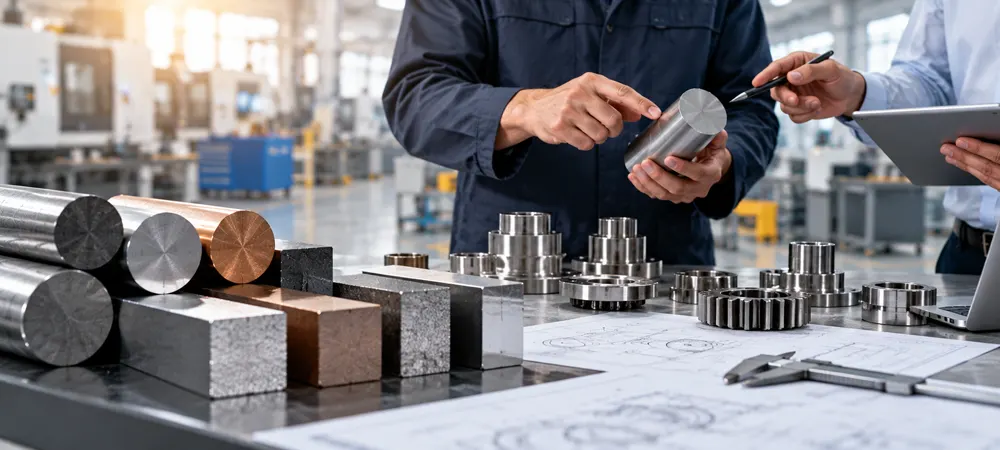
Automotive components operate under demanding conditions, including high temperatures, repeated mechanical stress, friction, and continuous movement. From engine valves and cylinder liners to valve guides, valve seats, and other precision-engineered parts, every component must meet specific performance and durability requirements.
Two important factors that influence component quality are **material selection and heat treatment**. Choosing the right material helps ensure that a component can withstand its intended operating conditions, while appropriate heat treatment can improve its mechanical properties, wear resistance, and service life.
For automotive component manufacturers, understanding these processes is essential for producing reliable, high-performance parts that meet industry requirements.
Why Material Selection Is Important in Automotive Manufacturing
Material selection determines how an automotive component performs under different operating conditions. Each component has unique requirements depending on its function, design, and working environment.
When selecting materials, manufacturers consider several important properties.
Strength and Durability
Automotive components must withstand repeated loads and mechanical stress without premature failure. Materials with suitable strength and fatigue resistance help components perform reliably throughout their intended service life.
Heat Resistance
Engine components are exposed to varying temperatures during operation. Exhaust valves, for example, experience significant thermal stress and require materials capable of retaining suitable mechanical properties at elevated temperatures.
Wear Resistance
Components that experience continuous friction require adequate resistance to surface wear. Appropriate material selection helps reduce premature deterioration and maintain dimensional accuracy.
Corrosion and Oxidation Resistance
Depending on the application, automotive components may be exposed to moisture, chemicals, combustion gases, and high-temperature oxidation. Selecting suitable materials can help protect components against these conditions.
2. Understanding Heat Treatment in Automotive Components
Heat treatment is a controlled manufacturing process in which metals are heated and cooled according to a specific temperature and time cycle to modify their properties.
Depending on the material and required performance, different heat-treatment processes may be used.
Hardening: In suitable steels, hardening increases hardness and wear resistance.
Tempering: Often performed after hardening, tempering helps balance hardness, toughness, and strength.
Annealing: Used to soften certain materials, improve ductility, or reduce internal stresses.
Normalizing: A controlled heating and cooling process used for certain steels to refine their microstructure and improve property consistency.
Stress relieving: Helps reduce residual stresses created during manufacturing processes such as machining or forming.
The correct process depends on the material grade, component geometry, manufacturing method, and required mechanical properties. Not every material or automotive component requires the same heat-treatment procedure.
3. How Heat Treatment Improves Component Performance
When correctly selected and controlled, heat treatment can improve the performance of automotive components in several ways.
Improved Hardness
Certain heat-treatment processes increase surface or overall hardness, helping components resist wear and deformation.
Better Mechanical Strength
Suitable thermal processing can improve the mechanical properties required to withstand operating loads and stresses.
Enhanced Fatigue Resistance
Automotive components often experience repeated loading cycles. Appropriate material and process selection can help improve resistance to fatigue-related failure.
Greater Dimensional Stability
Some heat-treatment and stress-relieving processes help manage residual stresses that could otherwise contribute to dimensional changes during subsequent machining or service.
Longer Service Life
When material properties and heat treatment are properly matched to the application, components can maintain their performance for longer and may require less frequent replacement.
However, incorrect heat treatment can cause excessive brittleness, distortion, cracking, or undesirable material properties. Process control is therefore essential.
4. The Role of Material Selection and Heat Treatment in Engine Valves
Engine valves are a good example of why material selection and heat treatment must work together.
Intake and exhaust valves perform different functions and experience different thermal conditions. Intake valves manage the entry of air or an air-fuel mixture, while exhaust valves release hot combustion gases from the cylinder.
Exhaust valves generally require particular attention to high-temperature strength, oxidation resistance, and thermal durability.
Depending on the engine design and application, manufacturers may select suitable alloy steels or heat-resistant alloys. The selected material must be compatible with the valve’s operating temperature, mechanical loads, and design specifications.
Heat treatment and other controlled manufacturing processes may then be used to achieve the required hardness, strength, toughness, and wear characteristics.
In addition, precision machining, surface finishing, and dimensional inspection are important for ensuring proper valve fitment and reliable seating.
5. Quality Control in Material Selection and Heat Treatment
Selecting the right material and heat-treatment process is only part of manufacturing quality. Proper inspection and process control are also essential.
Automotive component manufacturers may use several quality-control methods to verify that components meet their specifications.
Material verification: Confirms that the supplied material meets the required grade and composition.
Hardness testing: Measures hardness to verify that the material or treated component meets the specified requirements.
Dimensional inspection: Checks critical measurements, tolerances, and geometry after machining and thermal processing.
Microstructure examination: Helps assess the material’s structure and identify potential heat-treatment inconsistencies.
Non-destructive testing: Where appropriate, methods such as magnetic-particle or ultrasonic testing can help detect certain defects without damaging the component.
The appropriate inspection method depends on the component, material, customer requirements, and applicable standards. Consistent quality control helps reduce defects and improve manufacturing reliability.
6. Common Mistakes to Avoid
Poor material or heat-treatment decisions can affect the reliability and performance of automotive components. Manufacturers should avoid these common mistakes:
– Selecting materials based only on purchase cost.
– Ignoring the component’s operating temperature and mechanical loads.
– Applying an unsuitable heat-treatment process.
– Failing to verify material composition and properties.
– Overlooking dimensional changes after heat treatment.
– Neglecting hardness testing and other relevant quality checks.
– Using the same material specification for components with different operating requirements.
A systematic approach to material selection and process control helps manufacturers balance performance, durability, quality, and cost.
8. How the Right Manufacturing Processes Add Value
High-quality automotive components are produced through a combination of material expertise, controlled manufacturing, precision machining, and inspection.
When these activities are coordinated effectively, manufacturers can achieve more consistent component properties, reduce avoidable production defects, and meet customer specifications more reliably.
For buyers, understanding material selection and heat treatment can also help when evaluating suppliers. Important considerations include manufacturing experience, process-control capabilities, material traceability, inspection procedures, and the ability to meet application-specific requirements.
Renex Valves has more than 45 years of experience in the engineering industry. For automotive and industrial applications, buyers can explore the company’s product range and discuss their specific component requirements with its team.
Conclusion
Material selection and heat treatment are fundamental to the quality and performance of automotive components. The right material provides the properties needed for a component’s operating environment, while an appropriate heat-treatment process can help achieve the required hardness, strength, toughness, and wear resistance.
From engine valves and valve guides to cylinder liners, gears, and shafts, each component requires a carefully considered combination of material properties and manufacturing processes.
By prioritizing material verification, controlled heat treatment, precision machining, and quality inspection, manufacturers can produce components that meet demanding engineering requirements and deliver dependable performance.
