

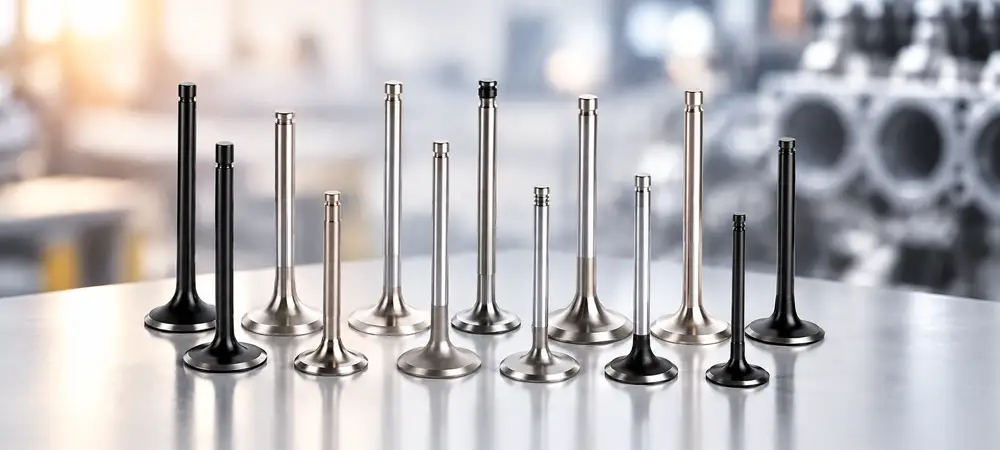
Engine valves are essential components that play a crucial role in an engine’s performance, efficiency, and reliability. They control the flow of air into the combustion chamber and allow exhaust gases to exit at the correct time. Selecting the right engine valves is important for maintaining smooth engine operation, improving durability, and reducing maintenance requirements.
However, not all engines operate under the same conditions. Passenger vehicles, heavy-duty diesel engines, agricultural machinery, power generators, and marine engines have different operating requirements. Therefore, choosing the right engine valves requires careful consideration of engine specifications, material properties, operating temperatures, and application requirements.
1. Understand the Type of Engine
The first step in selecting the right engine valves is to identify the engine type and its operating conditions. Different engines experience varying levels of pressure, temperature, speed, and mechanical stress.
Automotive engines: Require valves designed to support consistent performance, efficient combustion, and reliable operation under changing driving conditions.
Heavy-duty diesel engines: Need valves capable of withstanding high thermal loads, sustained operation, and demanding working conditions.
Agricultural engines: Require durable components that can perform reliably during extended operating hours and under challenging environmental conditions.
Power generator engines: Need dependable valves that support stable operation during continuous or standby power generation.
Marine engines: Require valves suitable for demanding operating environments, with material and design specifications appropriate to the engine and its service conditions.
Understanding the application helps determine the appropriate valve design, material, and performance characteristics.
2. Choose the Right Valve Material
Material selection is one of the most important factors in engine valve manufacturing. Engine valves are exposed to high temperatures, repeated mechanical loads, and combustion-related stresses. The material must withstand these conditions without excessive wear or deformation.
Common material considerations include:
Heat resistance: Exhaust valves experience particularly high temperatures, so their materials must retain suitable mechanical properties under thermal stress.
Wear resistance: Valve stems and contact surfaces require appropriate resistance to friction and repeated movement.
Strength and fatigue resistance: Valves must withstand repeated opening and closing cycles throughout the engine’s operating life.
Corrosion and oxidation resistance: Depending on the application, resistance to oxidation and corrosive conditions can be important.
The most suitable material depends on the engine design, fuel type, operating temperature, and manufacturer specifications. Different valve applications may require alloy steels, heat-resistant alloys, or other engineered materials.
3. Consider Intake and Exhaust Valve Requirements
Engine valves are generally classified into two main types: intake valves and exhaust valves. Although they perform complementary functions, their operating conditions differ.
Intake Valves
Intake valves allow air, or an air-fuel mixture in applicable engines, to enter the combustion chamber. They must provide reliable sealing and support efficient airflow.
When selecting intake valves, consider the required airflow, valve dimensions, stem specifications, seating characteristics, and compatibility with the cylinder head.
Exhaust Valves
Exhaust valves allow combustion gases to leave the cylinder. Because they are exposed to hot exhaust gases, they generally face greater thermal challenges than intake valves.
Important considerations include heat resistance, oxidation resistance, mechanical strength, and the ability to maintain effective sealing under operating conditions.
Selecting the correct intake and exhaust valves helps maintain proper engine breathing and combustion performance.
4. Check Valve Dimensions and Engine Compatibility
Even a high-quality valve may not perform correctly if it does not match the engine’s specifications. Dimensional accuracy and compatibility are therefore essential.
Before selecting replacement valves, verify the following:
– Overall valve length
– Head diameter and head profile
– Stem diameter
– Groove and keeper specifications
– Valve-seat angle and contact geometry
– Material and coating requirements, where applicable
– Compatibility with the cylinder head and valve train
Always refer to the engine manufacturer’s specifications or an approved parts catalogue. Avoid selecting valves based only on visual similarity, as small dimensional differences can affect installation, sealing, and engine operation.
5. Evaluate Manufacturing Quality and Heat Treatment
The quality of an engine valve depends not only on its raw material but also on the manufacturing processes used to produce it.
Precision machining helps achieve the required dimensions and surface finish. Appropriate heat treatment can improve hardness, strength, wear resistance, and resistance to fatigue, depending on the material and process selected.
Important quality considerations include:
– Consistent material properties
– Accurate machining and dimensional control
– Suitable heat treatment for the selected material
– Surface finish and stem quality
– Valve-head and seating-surface accuracy
– Inspection and quality-control procedures
A well-controlled manufacturing process helps produce components that meet the required engineering specifications and perform reliably in their intended applications.
6. Consider Engine Operating Conditions
The engine’s working environment also influences valve selection. An engine used for short daily journeys may experience different operating conditions from a diesel engine running for long hours in industrial equipment.
Consider factors such as:
– Typical engine speed and load
– Operating temperature
– Duration of continuous operation
– Fuel type and combustion conditions
– Maintenance intervals
– Expected service life
These factors help determine the required combination of material properties, valve geometry, and manufacturing specifications.
7. Select a Reliable Engine Valve Manufacturer
Choosing a suitable manufacturer is just as important as selecting the correct valve specifications. A reliable manufacturer should understand application requirements and follow appropriate quality-control procedures throughout production.
When evaluating a supplier, consider its manufacturing experience, product range, material expertise, dimensional inspection processes, traceability practices, and ability to meet customer specifications.
Technical support and clear product documentation can also help buyers identify the correct components for their engines.
Renex Valves has experience in the engineering industry and offers engine valve products for relevant automotive and industrial applications. Buyers should review the available product range and confirm specific technical requirements with the manufacturer before placing an order.
8. Common Mistakes to Avoid When Choosing Engine Valves
Avoid these common mistakes when selecting engine valves:
– Choosing a valve based only on price
– Ignoring engine manufacturer specifications
– Using an unsuitable material for the operating temperature
– Overlooking valve dimensions and seating geometry
– Failing to consider heat treatment and manufacturing quality
– Installing replacement valves without checking compatibility
– Ignoring the engine’s operating conditions and maintenance requirements
Making an informed selection can help reduce compatibility issues and support reliable engine operation.
Conclusion
Choosing the right engine valves requires more than matching a part to an engine. It involves evaluating the engine type, material requirements, intake and exhaust functions, dimensional compatibility, manufacturing quality, and operating conditions.
Whether the application involves passenger vehicles, heavy-duty diesel engines, agricultural machinery, power generators, or marine engines, selecting valves that meet the required engineering specifications is essential for dependable performance.
Working with an experienced manufacturer and verifying the correct specifications before purchase can help improve component reliability, support efficient engine operation, and reduce avoidable maintenance issues.
