

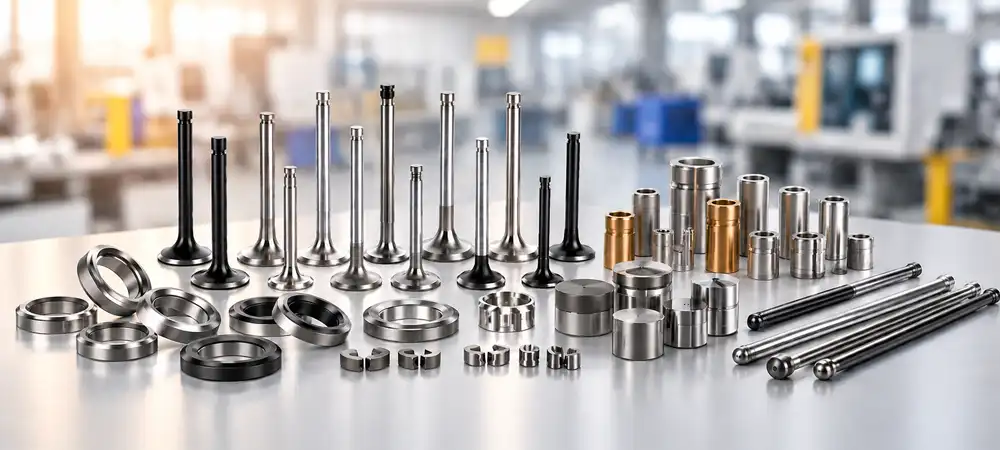
Heavy-duty diesel engines play a vital role in transportation, construction, agriculture, industrial machinery, and power generation. These engines are designed to operate under demanding conditions, often handling heavy loads and extended operating hours. To maintain reliable performance, every engine requires components that meet the appropriate engineering specifications.
From engine valves and valve guides to cylinder liners, valve seats, and other precision-engineered parts, component quality directly influences engine reliability, durability, and maintenance requirements.
Choosing high-quality components helps reduce premature wear, maintain consistent engine performance, and support longer service life. In this blog, we explore why component quality matters in heavy-duty diesel engines and the key factors to consider when selecting engine parts.
1. Understanding the Demands of Heavy-Duty Diesel Engines
Unlike many passenger vehicle engines, heavy-duty diesel engines are frequently used in applications that require sustained power and dependable operation.
These applications include:
– Heavy commercial trucks and buses
– Construction and earthmoving equipment
– Agricultural tractors and machinery
– Industrial diesel engines
– Diesel generator sets
– Marine propulsion systems
Depending on the application, these engines may experience high cylinder pressures, elevated temperatures, continuous mechanical loads, vibration, and long operating cycles.
Engine components must therefore be designed and manufactured to withstand their specific working conditions. Using parts that do not meet the required specifications can increase the risk of premature wear, reduced efficiency, and unexpected downtime.
2. Why High-Quality Engine Components Matter
Improved Engine Reliability
Reliable components help an engine perform consistently under its intended operating conditions. Properly manufactured parts with accurate dimensions and suitable material properties support correct fitment and dependable operation.
For heavy-duty vehicles and industrial machinery, improved reliability is particularly important because unexpected engine failure can interrupt operations and affect productivity.
Greater Durability and Wear Resistance
Engine components operate under repeated mechanical stress and friction. High-quality materials, appropriate surface treatments, and controlled manufacturing processes can help components resist wear and maintain their required properties.
This is important for parts such as cylinder liners, valve guides, valve seats, and other components exposed to continuous movement or demanding thermal conditions.
Reduced Maintenance Requirements
Components that meet the engine manufacturer’s specifications can help reduce avoidable maintenance caused by premature wear or incorrect fitment.
Although maintenance requirements depend on operating conditions and service schedules, selecting suitable replacement parts can help reduce unnecessary repairs and component changes.
Consistent Engine Performance
Properly functioning engine components help maintain compression, gas flow, combustion quality, and mechanical operation. When critical parts wear excessively or fail to seal correctly, engine performance can deteriorate.
Maintaining component quality helps support consistent engine operation throughout its intended service life.
3. The Importance of Engine Valves in Diesel Engines
Engine valves are critical components in heavy-duty diesel engines. They control the entry of air into the combustion chamber and the release of exhaust gases.
Intake Valves
Intake valves allow air to enter the cylinder. Correct valve dimensions, reliable sealing, and appropriate surface quality help support efficient airflow and engine operation.
Exhaust Valves
Exhaust valves release hot combustion gases from the cylinder. Because they are exposed to high temperatures and repeated mechanical loading, they require suitable material properties and manufacturing quality.
Depending on the application, important considerations include heat resistance, fatigue strength, oxidation resistance, and wear characteristics.
Why Valve Quality Matters
Poorly fitting, excessively worn, or damaged valves can contribute to compression loss, inefficient combustion, overheating, and reduced engine performance.
Selecting valves that match the engine manufacturer’s specifications helps support proper sealing, dependable operation, and appropriate service life.
4. Other Critical Components in Heavy-Duty Diesel Engines
Engine reliability depends on the combined performance of several interconnected components.
Cylinder Liners
Cylinder liners provide the working surface against which the piston and piston rings operate in engines designed with replaceable liners. Their dimensional accuracy, surface finish, wear resistance, and compatibility with the engine design are important for maintaining sealing and controlling oil consumption.
Valve Guides
Valve guides support and guide the movement of engine valves. Appropriate clearances, material properties, and wear resistance help maintain valve alignment and reliable operation.
Valve Seats
Valve seats provide the contact surface against which valves close. They must meet the required geometry and material specifications to support effective sealing and withstand repeated contact and thermal loading.
Valve Train Components
Components such as tappets, push rods, and related valve train parts help transfer motion within the valve operating mechanism, depending on the engine design. Their dimensional accuracy, strength, and wear characteristics contribute to reliable valve operation.
Each component should be selected according to the specific engine design and manufacturer recommendations.
5. Material Selection and Manufacturing Quality
The quality of an engine component begins with selecting the right material for its intended application.
Heavy-duty diesel engines operate under different temperatures, loads, and environmental conditions. Consequently, components may require different combinations of hardness, toughness, strength, wear resistance, and thermal stability.
Important manufacturing considerations include:
Material quality: The material must meet the specified grade and mechanical-property requirements.
Precision machining: Accurate dimensions and surface finishes help ensure proper fitment and function.
Heat treatment: Where required, controlled heat treatment can improve hardness, strength, wear resistance, or other material properties.
Surface finishing: Appropriate finishing helps achieve the required surface characteristics and dimensional consistency.
Quality inspection: Dimensional checks, hardness testing, and other relevant inspections help verify conformity to specifications.
No single material or manufacturing process is suitable for every component. The correct combination depends on the part’s function, operating conditions, and engineering requirements.
6. How High-Quality Components Help Reduce Engine Downtime
For businesses operating heavy trucks, construction equipment, agricultural machinery, or diesel generators, downtime can lead to operational delays and additional expenses.
Component failure may require repairs, replacement parts, labour, and lost operating time. In demanding applications, these costs can extend beyond the engine itself.
Using suitable, specification-compliant components can help reduce avoidable failures when combined with correct installation, regular maintenance, and proper operating practices.
Businesses can support engine reliability by:
– Following recommended maintenance schedules.
– Inspecting components for excessive wear or damage.
– Using replacement parts compatible with the engine.
– Ensuring correct installation and adjustment.
– Monitoring abnormal noise, vibration, smoke, or performance changes.
– Keeping maintenance and component replacement records.
High-quality components are an important part of reliability management, but they must be supported by appropriate maintenance and operating practices.
7. How to Choose the Right Components for Heavy-Duty Diesel Engines
Selecting replacement components requires more than comparing prices. Buyers and maintenance teams should evaluate the component’s specifications and suitability for the intended application.
Consider the following factors:
Engine compatibility: Verify the engine model, part number, dimensions, and manufacturer requirements.
Material specifications: Confirm that the material is appropriate for the component’s operating temperature, load, and wear conditions.
Manufacturing quality: Review dimensional accuracy, surface finish, and relevant inspection procedures.
Supplier experience: Choose suppliers that understand the application and can provide clear product specifications.
Product documentation: Check available technical information, traceability, and quality documentation where required.
Total operating cost: Consider expected service life, maintenance needs, installation costs, and potential downtime rather than evaluating purchase price alone.
Working with a knowledgeable manufacturer or supplier can help identify suitable components and reduce the risk of selecting incompatible parts.
8. The Role of Quality-Focused Engineering Manufacturers
Manufacturers serving the automotive and industrial sectors must balance material performance, precision manufacturing, dimensional consistency, and product reliability.
A quality-focused approach includes understanding application requirements, controlling production processes, and verifying that finished components meet the relevant specifications.
Renex Valves brings more than 45 years of experience in the engineering industry. Buyers looking for engine valves and related products can explore the company’s available product range and contact its team to discuss specific application and compatibility requirements.
Conclusion
High-quality components are essential for supporting the reliability, durability, and performance of heavy-duty diesel engines. Engine valves, cylinder liners, valve guides, valve seats, and other precision-engineered parts must meet the appropriate specifications to withstand demanding operating conditions.
By prioritising suitable materials, precision manufacturing, appropriate heat treatment, dimensional accuracy, and regular maintenance, operators can help reduce avoidable component failures and maintain dependable engine operation.
Whether an engine is used in commercial transportation, construction, agriculture, industrial equipment, or power generation, choosing the right components is an important step towards improving operational reliability and managing long-term maintenance costs.
